Last updated October 15, 2026
DIY vs Professional ADU: The Pasadena Homeowner’s Decision Guide
Here’s something most Pasadena homeowners don’t realize until they’re already three weeks into research: the DIY versus professional ADU question is rarely about whether you can swing a hammer. It’s about whether the City of Pasadena will let you. Pasadena’s building code requires licensed contractors for most structural, electrical, plumbing, and mechanical work on accessory dwelling units, regardless of your skill level or enthusiasm. This guide maps exactly which parts of an ADU project a motivated homeowner can legally control, which parts the city will require a professional to handle, and what those boundaries mean for your budget, timeline, and resale value. For how to hire a ADU contractor in Pasadena: a step-by-step guide, see our dedicated resource.
Quick Answer
In Pasadena, a homeowner can act as an owner-builder and legally manage portions of an ADU project, but structural framing, foundation work, electrical, plumbing, and HVAC all require California-licensed contractors under city code. The realistic DIY scope is limited to design coordination, finish selections, owner-supplied materials, and possibly painting or landscaping. Most Pasadena homeowners who try to self-manage the full build end up spending 15-25% more than a fixed-price contract once delay costs, rework, and coordination gaps are factored in.
Table of Contents
- The Permit Reality in Pasadena: What the City Actually Requires
- Owner-Builder Status: What It Grants and What It Restricts
- What a Motivated Homeowner Can Realistically Control
- The True Cost of Owner-Managing an ADU Project
- Three Scenarios Where DIY Project Management Genuinely Saves Money
- Three Scenarios Where DIY Reliably Costs More Than Hiring a GC
- How Pasadena’s Plan Check Treats Owner-Submitted vs. Architect-Stamped Plans
- What a Fixed-Price Contract Actually Transfers, and What You Still Own
The Permit Reality in Pasadena: What the City Actually Requires
Pasadena operates under the California Residential Code with local amendments, and the city’s Building & Safety Division is known for thorough plan review. When you apply for an ADU permit, the city isn’t just checking your square footage and setbacks. They’re verifying that every trade involved in the project holds the right license for the scope of work.
Here’s the breakdown of what Pasadena requires by trade:
- Structural and foundation work: A California-licensed general contractor or a licensed framing/foundation subcontractor must perform and sign off on this work. You cannot legally pour your own foundation or frame your own walls in Pasadena, even under owner-builder status.
- Electrical: A C-10 licensed electrician must handle all wiring, panel upgrades, and fixture installation. Pasadena Water and Power will not energize a new service without a signed electrical permit from a licensed electrician.
- Plumbing: A C-36 licensed plumber is required for all supply lines, drain lines, gas lines, and fixture installation. This includes trenching for sewer connections.
- HVAC and mechanical: A C-20 licensed HVAC contractor must install or modify heating, cooling, and ventilation systems. This includes mini-split heat pumps, which are the most common heating and cooling solution for Pasadena ADUs.
- Roofing: A C-39 licensed roofer is required for any roof work beyond minor repairs. Given Pasadena’s wildfire-adjacent zones, roof assemblies often need specific fire-rated materials that require professional installation documentation.
What this means in practice: even if you’re highly motivated, you cannot legally act as the installer for the core systems of your ADU. Your role as an owner-builder is coordination and project management, not hands-on construction of the mechanical, electrical, or structural systems.
We’ve walked through the plan check process with hundreds of Pasadena homeowners, and the most common surprise is usually the electrical requirement. Homeowners assume they can handle simple wiring, but Pasadena Water and Power’s inspection process is strict about licensed electrician sign-off.
Owner-Builder Status: What It Grants and What It Restricts
California allows homeowners to apply for permits as an owner-builder, which exempts you from the requirement to hire a licensed general contractor for the overall project. But here’s what most Pasadena homeowners don’t learn until they’re deep in the process: owner-builder status has a five-year restriction written into state law.
If you act as your own owner-builder on an ADU and then sell the property within five years of completion, you must disclose that you performed owner-builder work on the property. The new buyer then inherits the requirement that any licensed contractor who works on that ADU pulls their own permits. This disclosure can complicate a sale, and some buyers will negotiate specifically because of it.
Owner-builder status also doesn’t exempt you from hiring licensed subcontractors for the trades listed above. What it does allow:
- You can pull the overall building permit in your own name
- You can hire and manage subcontractors directly, without a general contractor in between
- You can coordinate the inspection schedule with the city
- You can perform some finish work yourself, including painting, flooring installation, cabinet installation, and landscaping
What it does not allow in Pasadena:
- Performing your own structural framing, foundation, or shear wall installation
- Performing your own electrical work, panel installation, or service upgrades
- Performing your own plumbing, gas line, or sewer work
- Performing your own HVAC installation
- Skirting the city’s inspector requirements for any of the above
Owner-builder status is a legitimate path, but it’s a project management role, not a hands-on construction license. For related more guides & resources on navigating the process, explore our blog. If you go into it thinking you’ll build the whole thing yourself, Pasadena’s inspectors will stop you at the first rough inspection.
What a Motivated Homeowner Can Realistically Control
Let’s be honest about where DIY energy actually pays off in a Pasadena ADU project. The fastest way to blow up your budget is to spend time and money on things you shouldn’t be doing, while ignoring the areas where homeowner involvement genuinely reduces cost and improves the outcome.
Here’s what we’ve seen homeowners successfully manage in Pasadena without jeopardizing the permit or the finished product:
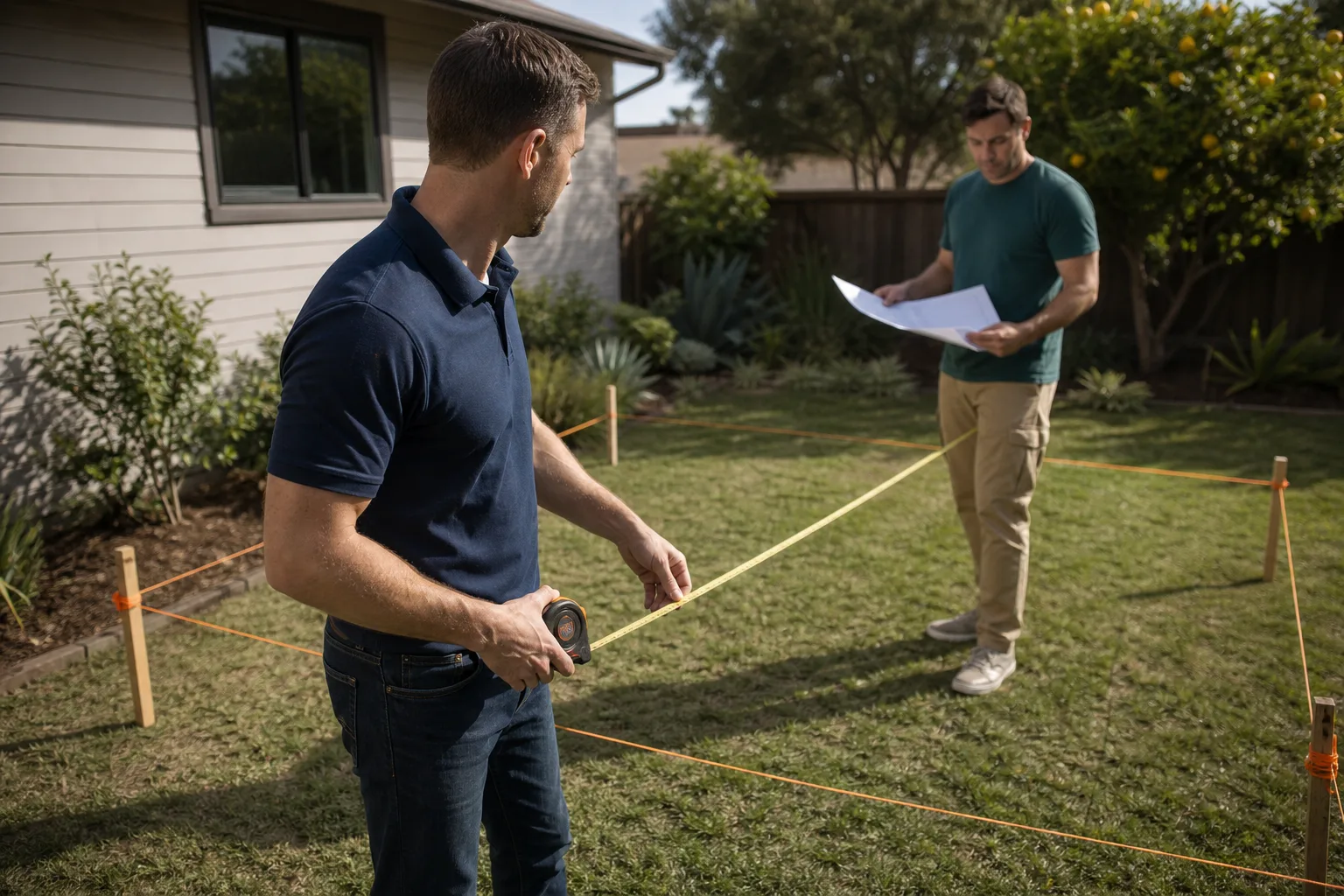
- Design and layout decisions. You know how your family lives. Choosing whether the ADU faces the backyard or the side yard, where the kitchen goes relative to the entrance, whether you want a loft or a single-story footprint – these decisions are yours, and they don’t require a license. The fastest way to waste money is to hand your builder a vague idea and expect them to design it for free. Come with a clear vision, even if it’s sketched on graph paper.
- Finish selections. Flooring, tile, fixtures, cabinet hardware, paint colors, counter top material, door styles. This is where homeowners save real money by sourcing materials directly or choosing options at supply houses rather than accepting builder catalog pricing.
- Owner-supplied materials. Many Pasadena homeowners purchase their own appliances, lighting fixtures, plumbing fixtures, and even flooring materials, then hand them to the contractor for installation. This works best when the materials are on-site before the crew needs them, and when you coordinate delivery timing with the project schedule. A refrigerator sitting in the driveway for three weeks because the kitchen isn’t ready is a storage problem you own.
- Painting. Interior painting is generally within owner-builder scope in Pasadena. Exterior painting on new construction typically needs to be completed before final inspection, but the work itself doesn’t require a license. If you’re willing to spend a weekend with rollers and tape, interior painting can save $2,000 – $4,000 on a typical ADU.
- Landscaping and hardscape around the ADU. Once the building is done, the yard around it is yours. Pasadena has specific requirements for permeable surfaces and tree protection during construction, but the final landscaping is a legitimate DIY area. Just don’t start until the permit is finalized and the inspector has signed off.
The theme here is control of decisions and finishes, not control of the structural work. The structural work belongs to licensed professionals because that’s what keeps the building standing and keeps your insurance valid.
The True Cost of Owner-Managing an ADU Project
When we talk to Pasadena homeowners who are considering the owner-builder route, the conversation usually starts with the number they think they’ll save by avoiding a general contractor’s overhead and profit. That’s a real number, usually 10-20% of the project cost. But it’s important to look at what that overhead actually buys you, because when you remove it, you take on those responsibilities yourself.
Here’s what a general contractor’s overhead covers on a typical Pasadena ADU project:
- Subcontractor scheduling and coordination. An ADU involves five to eight different trades, depending on scope. Framers, electricians, plumbers, HVAC techs, roofers, drywallers, painters, flooring installers. Each trade has its own schedule, and each one depends on the trade before it finishing. When the drywallers show up and the electrician hasn’t finished rough-in inspection, you pay the drywallers a trip charge and reschedule them. That’s a delay cost, and it’s yours when you’re managing the job.
- Inspection scheduling with Pasadena Building & Safety. Pasadena requires multiple inspections during an ADU build: foundation, rough framing, rough electrical, rough plumbing, insulation, drywall, final. Each inspection requires you to schedule a specific window, often 24-48 hours in advance. If the inspector arrives and the work isn’t ready, you reschedule. If a trade finishes late, you miss your window. This coordination time is real labor, and it falls on you when there’s no GC.
- Absorbing delay costs. When a subcontractor doesn’t show up, or shows up late, or does substandard work that fails inspection, someone pays for the gap in schedule. In a fixed-price contract, the general contractor absorbs most of that risk. When you’re self-managing, you absorb it. A single two-week delay on an ADU project can cost $3,000 – $6,000 in wasted time, rework, and lost rental income if you were planning to rent the unit.
- Warranty and call-back responsibility. When a plumber’s work fails six months after the ADU is done, who do you call? If you hired the plumber directly, you call them and hope they stand behind their work. If a GC managed the project, the GC handles the warranty process. If the work wasn’t done right, the GC makes it right. That’s a real transfer of liability, and it’s worth actual money.
We’ve built enough ADUs in Pasadena to know that the projects that ran over budget were rarely because materials cost more than expected. They ran over because coordination broke down, and someone had to pay to fix the break. When you’re the owner-builder, that someone is you.
Three Scenarios Where DIY Project Management Genuinely Saves Money in Pasadena
This isn’t a blanket argument against owner-builder work. There are specific situations where self-managing an ADU in Pasadena makes financial sense, and it would be dishonest not to lay them out clearly.
- You have genuine construction or project management experience. If you’ve managed commercial construction projects, worked as a superintendent, or spent years in a related trade, you already understand scheduling, inspection sequences, and subcontractor management. In that case, the GC’s overhead is redundant for you, and self-managing can save 10-15% on a $200,000 ADU. That’s $20,000-$30,000, which is real money. You’re not buying expertise you already have.
- You’re retired or work from home with a flexible schedule. The biggest hidden cost of owner-building is time. Inspections happen on the city’s schedule, not yours. Subcontractors arrive when they arrive. If you’re available to meet inspectors, take deliveries, and walk the site every day, you’re not losing billable hours to the project. A retiree who enjoys being on-site and coordinating people can save the GC overhead without incurring an equivalent time cost.
- You’re working with a prefab ADU manufacturer that handles most of the build in a factory. Companies like Dvele and Plant Prefab build the majority of the ADU in a controlled factory environment, then ship it to your Pasadena lot for assembly. The factory handles framing, electrical rough-in, plumbing rough-in, and often finish work before the unit ever arrives. The on-site work is site prep, foundation, utility connections, and finishing. With a prefab unit, the on-site scope of work is smaller and more predictable, which makes owner-management more feasible. You still need licensed trades for the utility connections, but there’s less to coordinate.
If any of those three describes your situation, owner-builder is a legitimate path. If none of them do, it’s worth being honest about what you’re taking on before you file the permit application.
Three Scenarios Where DIY Reliably Costs More Than Hiring a General Contractor
The flip side matters just as much. Here are the situations where we’ve watched Pasadena homeowners spend more money self-managing than they would have paid a GC from the start.
- You’re converting a garage that was built before 1980. Older Pasadena garages often have structural issues, non-compliant footings, or asbestos-containing materials that require abatement. What starts as a straightforward conversion quickly becomes a structural retrofit, and suddenly you’re managing a project that’s twice as complex as the average ADU. Homeowners who self-manage these conversions reliably hit change orders that eat the entire GC savings, because they didn’t know what was behind the drywall until it was open.
- You’re working full-time and the ADU is a side project. A standard Pasadena ADU takes six to nine months from permit application to final inspection. That’s 30-40 weeks of phone calls, scheduling, material runs, and problem-solving. If you’re working a full-time job, you’re doing this at night and on weekends. The city doesn’t inspect on weekends. Subcontractors charge extra for weekend work, if they’ll do it at all. Every week of delay because you couldn’t meet an inspector on a Tuesday morning is a week of carrying costs you wouldn’t have if a GC was on-site.
- You’re planning to rent the ADU immediately after completion. The opportunity cost of delay is highest when there’s rent on the table. A one-bedroom ADU in Pasadena rents for about $2,200 – $2,800 a month. Every month of delay costs you that rent. If self-managing adds three months to the build (which is conservative in our experience), that’s $6,600 – $8,400 in lost income. On a project where the GC overhead might have been $20,000 – $30,000, a few months of delay closes the gap fast.
The pattern in all three: the savings come from avoiding the GC’s fee, but the costs come from delays and unknowns that a GC’s experience would have caught early. When the unknown is expensive, self-managing costs more than hiring the professional.
How Pasadena’s Plan Check Treats Owner-Submitted vs. Architect-Stamped Plans
Pasadena’s Building & Safety Division reviews every ADU permit application through the same code lens, but the submission package matters. Here’s what the city’s plan check process actually looks like in practice.
Owner-submitted plans: If you draft your own plans (or use a basic drafting service), the plan checker will review them against the California Residential Code and Pasadena’s local amendments. The reviewer will issue corrections for anything non-compliant, and you’ll resubmit. This review-resubmit cycle can take three to six months for owner-submitted plans with significant errors. Each resubmission goes to the back of the queue. The city doesn’t prioritize owner-submitted work; it processes it in order.
Architect-stamped plans: When a California-licensed architect or engineer stamps the drawings, the plan check process changes. The reviewer knows the drawings have been prepared by someone who understands structural engineering, building codes, and Pasadena’s specific requirements. Corrections are fewer, resubmissions are rare, and the review typically completes in four to eight weeks. The stamp doesn’t exempt the plans from review; it just means the reviewer has fewer questions because a professional has already answered them.
The cost difference is real: an architect’s stamp on a typical ADU might add $6,000 – $12,000 to the design phase. But if it saves three months of plan check back-and-forth, that’s three months of carrying costs, three months of lost rent, and three months of living with an unfinished ADU in your backyard. In most cases we’ve seen in Pasadena, the architect-stamped route costs less in total when you account for time.
One more thing worth knowing: Pasadena requires a soils report for most ADU foundation permits. That’s a geotechnical engineer’s report, not something you can draft yourself. Budget $2,000 – $4,000 for it, and expect it to be required regardless of who drafts the plans.
What a Fixed-Price Contract Actually Transfers, and What You Still Own
The most misunderstood part of the DIY versus professional decision is what a fixed-price contract with a written warranty actually changes about who owns what. Let’s be specific.
What the contractor takes on:
- Cost overruns on labor and materials within the contract scope. If the framers take longer than estimated, that’s the contractor’s problem. If lumber prices rise between signing and purchase, the contractor absorbs it. The price you signed is the price you pay, full stop.
- Subcontractor scheduling and accountability. The GC calls the plumber when the plumber doesn’t show. The GC deals with the framer who framed a wall wrong. You don’t have those conversations.
- Inspection scheduling and correction. The GC schedules every inspection with Pasadena Building & Safety. If the inspector fails an inspection, the GC schedules the correction and the re-inspection. You’re not standing in line at the permit counter.
- Warranty responsibility. If the ADU has a construction defect within the warranty period, the GC returns to fix it. This is not a courtesy; it’s a contractual obligation. If the GC won’t honor it, you have a contract to enforce. When you self-manage, you’re relying on each subcontractor’s individual goodwill.
What you still own, even with a fixed-price contract:
- Design decisions and change orders. If you change your mind about the kitchen layout halfway through framing, you own the cost of that change. A good contract will require written change orders with pricing before the work changes. A bad contract will let changes slide into the final bill. You own the discipline of saying no to changes you can’t afford.
- Site access and conditions. If the contractor can’t get to the build site because of a locked gate, a broken fence, or an overgrown yard, you own the delay. Pasadena’s older neighborhoods often have narrow driveways and mature trees that complicate access. Discuss site access before signing, not after excavation starts.
- Finish selection deadlines. If the contractor is ready to install flooring and you haven’t selected the flooring, the schedule slides and it’s your slide. The contract protects the contractor from your indecision as much as it protects you from their overruns.
- Maintenance and ongoing upkeep. A warranty is not a maintenance plan. Once the ADU is done, the HVAC filter changes, the paint touch-ups, and the gutter cleaning are yours. A good contractor explains what maintenance looks like before you move in.
The fixed-price contract with a written warranty transfers the construction risk to the contractor while leaving the decision risk with you. That’s the deal you’re actually signing, and it’s a good deal when you understand it.
How Prefab and Modular ADU Brands Change the DIY Calculation
Pasadena has become one of the stronger markets in Southern California for prefab and modular ADUs, and the brand landscape matters when you’re weighing DIY project management against hiring a builder. The prefab model shifts where the work happens, and that changes what’s left for you or your contractor to manage on-site.
Companies like Dvele and Plant Prefab build the ADU shell, insulation, rough electrical, rough plumbing, and much of the finish work in a factory, then deliver the unit to your Pasadena lot on a truck. The on-site work is foundation, utility trenching, connections, and the cosmetic finishing where the module meets the ground. That’s a smaller, more predictable on-site scope than a stick-built ADU, which is why owner-builders often gravitate toward prefab.
But the on-site work that remains is the work that Pasadena’s inspectors care about most: the foundation, the sewer connection, the electrical service, and the gas line if you’re using gas. Those still require licensed trades, and they still require inspection. Prefab doesn’t eliminate the hard parts; it moves the easier parts into a factory and leaves the regulated parts on your lot.
What we’ve seen in Pasadena is that prefab works best when the homeowner has a strong sense of what they want and a partner who understands local code. The factory can build to spec, but the spec has to account for Pasadena’s seismic requirements, fire zone rules, and utility connection standards. If the spec is wrong, the fix is harder with a factory-built unit than with stick framing, because you can’t just move a wall after it arrives.
We work with several prefab manufacturers, including Dvele and Plant Prefab, because some lots and budgets are well-suited to the factory-built approach. The decision usually comes down to site access, crane clearance, and what the homeowner wants from the finished unit. For a homeowner considering owner-builder management, prefab shrinks the coordination burden. For a homeowner who wants the simplest path, prefab plus a contractor who manages the site work is often the cleanest route.
Common Mistakes to Avoid
- Starting site prep without a finalized permit. Pasadena requires a site plan, a soils report, and full permit approval before excavation begins. Digging early risks a stop-work order and a re-inspection fee, plus the cost of filling the excavation back in if the city rejects the placement.
- Hiring unlicensed subcontractors to save money. Pasadena will fail the inspection, and the work will need to be redone by a licensed trade. You’ll pay twice and lose the time. The money you save on an unlicensed electrician disappears the day the inspector checks the license.
- Underestimating utility connection costs. Pasadena Water and Power and SoCalGas have their own connection fees, trenching requirements, and inspection timelines. These costs run $8,000 – $20,000 depending on distance from the main, and they’re not optional. Homeowners who budget only for the building and not the utilities find out the hard way.
- Skipping the architect on a lot with grade changes or unusual setbacks. Pasadena’s hillside neighborhoods like San Rafael and Annandale have specific grading and drainage requirements that a basic drafting service won’t catch. Architect-stamped plans for these lots save months of plan check corrections.
- Assuming owner-builder means you can do everything yourself. The five-year resale restriction and the licensed-trade requirements mean you’re a project coordinator, not a builder. Misunderstanding this from the start leads to permit violations and failed inspections.
- Not budgeting for construction waste removal. Pasadena requires proper disposal of construction debris, and older garage conversions often produce more waste than expected, including materials that require special handling. A 10-yard dumpster runs $400 – $600 per haul in Pasadena, and a full garage conversion can need three to five hauls.
When to Call a Professional
If any of the following describes your Pasadena ADU project, the question isn’t whether to hire a professional; it’s which professional to hire. A garage conversion on a pre-1980 slab. A lot in the hills with grade changes or seismic setbacks. A project where you’re planning to rent the unit immediately and every month of delay costs you rent. A project where you don’t have 10-15 hours a week to spend on coordination and site visits for the next six to nine months. If you’re nodding at any of these, the cost of a general contractor is not overhead; it’s the price of getting the ADU built without your life becoming the project. ADU Builders in Pasadena handle the full scope, from permit to final inspection, with written pricing before work starts. If you’re weighing the conversion route, see our guide on Garage Conversion Contractor in Pasadena for the specifics of that scope. Seedling ADU Pasadena offers free estimates in Pasadena; call (626) 657-5461 to get a written price for your project.
Frequently Asked Questions
A standard one-bedroom ADU in Pasadena typically costs $180,000 to $280,000 for a stick-built unit, while prefab units from manufacturers like Dvele or Plant Prefab range from $160,000 to $240,000 including site work and utility connections. Garage conversions run $120,000 to $200,000 depending on the condition of the existing structure. These are total project costs including permits, utilities, and finishes. Call (626) 657-5461 for a written quote specific to your lot.
You can act as an owner-builder and manage the project, but you cannot legally perform structural, electrical, plumbing, or HVAC work yourself under Pasadena’s building code. Those trades require California-licensed contractors regardless of your owner-builder status. You can handle design direction, finish selections, painting, and landscaping within the rules.
If you act as owner-builder on an ADU and sell the property within five years of completion, you must disclose this to the buyer, and the buyer inherits restrictions on future contractor work on that ADU. This disclosure can affect resale value and buyer financing. The restriction was written into California law to prevent unlicensed building work from being passed off as professionally built.
Architect-stamped ADU plans typically complete plan check in four to eight weeks in Pasadena. Owner-submitted plans without professional stamps routinely take three to six months due to correction cycles and resubmission queues. The soils report, which is required for most ADU foundations, adds two to four weeks to either timeline.
With a fixed-price contract, the price you sign is the price you pay for the contracted scope of work. Cost overruns on labor and materials within that scope are the contractor’s responsibility, not yours. Changes you request after work starts are priced separately through written change orders before the work proceeds. This is why a written price before any work starts matters more than the estimate itself.
A typical stick-built ADU in Pasadena takes six to nine months from permit application to final inspection. Prefab ADUs from manufacturers like Dvele or Plant Prefab can complete in four to six months, since the unit is built in a factory while site work happens on your lot. Delays in plan check, utility connections, or inspection scheduling can extend either timeline. Call (626) 657-5461 for a realistic timeline for your specific lot and scope.
The Bottom Line
The DIY versus professional ADU decision in Pasadena comes down to three things: what the city will let you do, what your time is worth, and who absorbs the risk when something goes wrong. Pasadena’s code requires licensed contractors for the structural and mechanical work that keeps an ADU safe and compliant, which means your DIY scope is coordination and decisions, not construction. Owner-builder status can work if you have construction experience, flexible time, and a prefab plan that shrinks the on-site scope. But for most Pasadena homeowners, the fixed-price contract with a written warranty is the most cost-effective path when you factor in delay costs, plan check cycles, and the risk you own when you manage the job yourself. If you’re weighing the options for your lot, Seedling ADU Pasadena home is built around written pricing before work starts and a 365-Day Done Right Promise on every job. If you’re considering adding space that’s not a separate unit, see our guide on Home Addition Contractor in Pasadena. Call (626) 657-5461 to get a free estimate and a written price for your ADU.
Written by Ben Ortega, Owner at Seedling ADU Pasadena, serving Pasadena since 2001.