Last updated October 15, 2026
The Complete Guide to ADU in Pasadena
Pasadena has at least three distinct zoning overlays, including Historic Preservation and Hillside areas, that can quietly add months and thousands of dollars to an ADU project that would sail through in a neighboring city like Arcadia. Most online guides treat ADU construction as a generic California process, but the reality is that Pasadena’s own code, utility territory, and design review layers are the real curriculum. This guide walks you through what actually determines whether a Seedling ADU Pasadena home project gets built on time and on budget, from first call to final inspection.
Quick Answer
An ADU in Pasadena typically costs between $180,000 and $420,000 depending on whether you convert an existing garage, build detached new construction, or use a prefab system from brands like Abodu or Dvele. The city’s timeline runs roughly 8 to 14 months from design start to certificate of occupancy, with Historic Preservation and Hillside overlay zones adding 2 to 4 months of additional review. State law AB 2221 has relaxed many local restrictions, but Pasadena retains meaningful local control over design, setbacks, and utility connections.
Table of Contents
- How Pasadena Zoning Overlays Change Your ADU Project
- Pasadena Water and Power vs. SCE: What Changes for Your ADU
- Setback Rules by Zone: R1, RM, and Hillside Compared
- Owner-Occupancy and AB 2221: What Actually Applies Now
- What a Pasadena ADU Costs, Line by Line
- A Realistic Pasadena ADU Timeline, Month by Month
- Design Review in Historic Districts: What to Expect
- Prefab and Modular ADUs in Pasadena: When They Make Sense
- Common Mistakes to Avoid
- When to Call a Professional
- Frequently Asked Questions
- The Bottom Line
How Pasadena Zoning Overlays Change Your ADU Project
Pasadena’s base zoning districts, R1, RM, and hillside, already create a patchwork of rules that vary significantly from one lot to another. But what catches most homeowners off guard is the overlay system: Historic Preservation Overlay Zones, or HPOZs, as well as Hillside Overlay areas, which stack additional review requirements on top of the underlying zone. In our experience building across Pasadena, an ADU that would clear planning in a flat R1 lot north of the 210 in about six weeks can take four months longer in an HPOZ like Bungalow Heaven or the Arroyo Seco area, not because the structure is any larger, but because a separate design review board must approve materials, massing, and fenestration before the permit can move forward. That review is not optional, and it is not purely advisory. The city’s historic preservation staff will evaluate your ADU against the district’s specific design guidelines, which may restrict window styles, roof pitch, siding material, and even paint color on the ADU itself if it is visible from the street. The practical implication is that a detached ADU placed behind the primary home, invisible from the public right-of-way, often faces a lighter touch than one positioned in a side yard where passersby can see it. If you are planning an ADU in Pasadena and you know your lot carries an overlay designation, budget for extra design time and consider a site plan that minimizes street visibility.
Pasadena Water and Power vs. SCE: What Changes for Your ADU
One detail that larger statewide guides almost never mention is that Pasadena is served by two different electrical utilities depending on where your lot sits. Most of the city falls under Pasadena Water and Power, a city-run utility with its own interconnection rules, service standards, and fee schedule. A smaller portion of the city, particularly some eastern and northeastern neighborhoods, falls under Southern California Edison territory. The difference matters in three concrete ways. First, PWP requires a main service panel review that is often more stringent than SCE’s, meaning an ADU might require a panel upgrade in PWP territory but not in SCE territory, a difference of $3,000 to $6,000. Second, if you plan to install solar on the ADU or share solar production from the primary home, PWP’s net metering and interconnection application timelines differ from SCE’s, and the paperwork moves at a different pace. Third, PWP’s connection fees for a new meter on a detached ADU run higher than SCE’s on average, which becomes relevant if you intend the ADU to be separately metered for tenant billing. The practical takeaway: before you finalize your ADU budget, confirm which utility serves your specific address. Your ADU Builders in Pasadena should pull your address against utility territory maps during the feasibility phase, not after construction begins.
Setback Rules by Zone: R1, RM, and Hillside Compared
California state law has progressively overridden local setback rules for ADUs, but Pasadena still applies its own standards in several important cases, and the differences between zones are often the difference between a permitted ADU and one that requires a variance, which can add six months and significant cost. The table below reflects what we see in current Pasadena ADU submittals.
- R1 single-family zones: side and rear setbacks for a detached new ADU are typically 4 feet, matching state minimums. An attached ADU may be built at the same setback as the primary home when the primary home was legally built with smaller setbacks.
- RM multi-family zones: when an ADU is added to a lot with an existing multi-family building, Pasadena applies a 5-foot rear setback for detached units and requires at least 4 feet from any existing structure, which is stricter than the state baseline in some configurations.
- Hillside zones: this is where the biggest local deviations occur. Pasadena’s hillside standards impose additional setback requirements tied to slope, sometimes adding 5 to 10 feet beyond the state minimum, and may restrict building height to 14 feet for detached ADUs when the slope exceeds 15 percent. The city also applies a more involved geotechnical review in hillside areas, which is not a design preference but a structural requirement, and it often adds $8,000 to $20,000 in soil and foundation work.
We advise homeowners to request a parcel-specific zoning report before paying for design work, following the Home Addition Contractor Maintenance Checklist for Pasadena Homeowners. The report costs a few hundred dollars and can prevent a full redesign later.
Owner-Occupancy and AB 2221: What Actually Applies Now
For years, Pasadena maintained an owner-occupancy requirement on ADU properties, meaning the owner had to live in either the primary home or the ADU. That rule was effectively invalidated by successive state bills, most recently AB 2221, which expanded allowances for two-story ADUs, attached ADUs within existing building envelopes, and front-yard conversions, while also removing local owner-occupancy requirements statewide through 2030. In Pasadena today, no owner-occupancy requirement applies to ADU permit applications, and the city cannot impose one as a condition of approval. What the state bill did not remove is Pasadena’s authority to regulate ADU design in historic districts, its hillside safety standards, and its utility service requirements. Our experience is that some owners still encounter outdated language in older city documents or from neighbors who remember the old rules, so it is worth confirming your permit intake is reviewed under current state law, not a legacy checklist. If a city staff member cites an owner-occupancy requirement, ask for the current municipal code section in writing. In recent practice, that tends to resolve the discrepancy on the spot.
What a Pasadena ADU Costs, Line by Line
A Pasadena ADU is not one number, and any guide that gives you one number without line items is not helping you plan. Here is a realistic breakdown of current costs based on the type of project we price most often in Pasadena.
- Garage conversion to ADU (350 to 500 sq ft): $120,000 to $200,000. The structural shell already exists, but foundation repairs, insulation upgrades, new electrical service, and finish plumbing bring the number well above a simple remodel.
- Detached new construction ADU (400 to 800 sq ft): $220,000 to $380,000. Includes site work, foundation, framing, all trades, and utility connections. Larger one-bedroom and two-bedroom floor plans push toward the upper end.
- Prefab or panelized ADU (Abodu, Cover, Dvele): $200,000 to $420,000 installed, depending on the brand, unit size, and site work. These systems reduce on-site construction time significantly, but the factory-built unit cost is only one line item; foundation, utility trenching, and Pasadena permit fees still apply and can run $60,000 to $110,000 combined.
- Architectural and structural design: $12,000 to $28,000 for custom detached units. Garage conversions run lower, often $6,000 to $14,000.
- Pasadena permit and impact fees: $7,000 to $22,000 depending on square footage, school district fees, and utility connection charges.
Every project we price in Pasadena receives a written price before any work starts, with no surprise line items added after crews arrive. If you want to compare costs across an entire home addition rather than just an ADU, our Home Addition Contractor in Pasadena page breaks out a related set of numbers. For garage-focused work, see Garage Conversion Contractor in Pasadena.
A Realistic Pasadena ADU Timeline, Month by Month
Here is what an ADU project in Pasadena actually looks like from first call to the day you can hand someone the keys. This assumes a standard R1 lot without Historic Preservation or Hillside overlays. Add 2 to 4 months if your lot carries either designation.
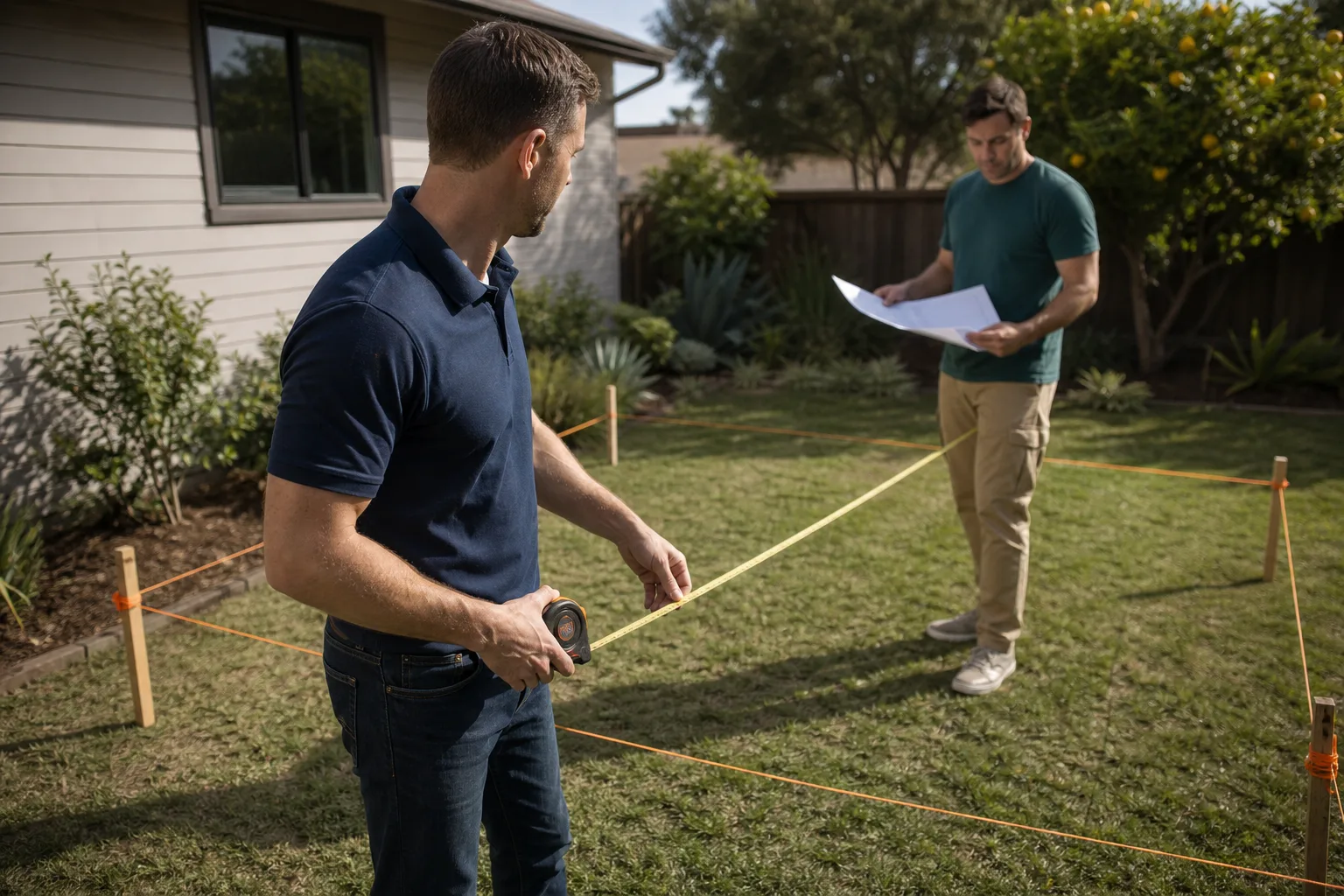
- Months 1-2: Feasibility and site analysis. A parcel-specific zoning check, utility territory confirmation, and a site measurement. If the lot fails any of these early checks, you will change the project scope now instead of during plan check.
- Months 2-4: Design and structural engineering. Floor plan, elevations, energy calculations, and structural drawings. Prefab buyers may be able to cut this phase roughly in half because the manufacturer carries the structural design load.
- Months 4-6: Pasadena plan check and corrections. The city’s current turnaround for ADU plan check is roughly 4 to 10 weeks, and any corrections add another week or two per round. Most projects clear within two rounds.
- Months 6-7: Permit issuance and utility applications. Once the permit is issued, Pasadena Water and Power or SCE connection applications are filed. This is also when material procurement begins in earnest.
- Months 7-11: Construction. A garage conversion runs 3 to 4 months. Detached new construction runs 4 to 6 months. Prefab units often cut the on-site phase to 2 to 3 months once the foundation is ready.
- Months 11-12: Inspections and certificate of occupancy. Pasadena schedules plumbing, electrical, structural, and final inspections. Once the certificate is issued, the ADU is legal to occupy.
This is the honest timeline. Some projects finish faster, but planning around the short end is how families end up disappointed. The 365-Day Done Right Promise we put on every project means that if something is not done right during any of these phases, we make it right.
Design Review in Historic Districts: What to Expect
If your Pasadena property falls within one of the city’s Historic Preservation Overlay Zones, including Bungalow Heaven, Orange Heights, or the Arroyo Seco districts, your ADU permit path includes a review step that does not exist for the majority of Pasadena lots. The city’s Historic Preservation staff, and in some cases a design review board, evaluates the ADU against district-specific guidelines. The review focuses on how the new structure relates to the historic character of the area, which translates into specific requirements around roof form, window proportion, siding material, and color palette. In practice, a detached ADU placed at the rear of a deep lot and not visible from the street often receives a shorter review with fewer conditions. The same ADU pushed toward the front side yard, visible from the public sidewalk, will face a more rigorous standard, and the conditions can include changes to architectural details that the homeowner would not otherwise choose. The cost of this review is not just time, it is also design: a window package change driven by HPOZ requirements can add $4,000 to $8,000 to the window budget alone. We recommend that any homeowner in an HPOZ hire a designer who has worked in that specific district before. A designer who understands what the review board has approved in the past can submit a project that clears review in a single round instead of three.
Prefab and Modular ADUs in Pasadena: When They Make Sense
Pasadena homeowners increasingly compare three paths: site-built stick framing, panelized systems like Cover, and fully modular units from Abodu or Dvele. The honest answer is that no single path wins for every lot. Prefab and modular units shine on Pasadena lots with restricted access, where a narrow driveway or a zero-lot-line neighbor makes traditional framing disruptive. When a unit is built in a factory and delivered in modules, the on-site construction phase shrinks dramatically, which matters to families with kids and pets who do not want a six-month construction site in the backyard. The tradeoff is up-front flexibility: modular units are built to set dimensions, so a lot whose buildable area is an irregular shape may force a custom site-built design anyway. Prefab pricing also runs higher per square foot than site-built framing in many cases, but the shorter timeline and reduced on-site disruption are real value for some families. In our experience, a Dvele unit makes sense when a homeowner wants a high-performance envelope and is willing to pay for it. An Abodu unit is often the right call when the goal is a one-bedroom ADU delivered and set quickly. Cover’s panelized system is the middle path: more design flexibility than modular, faster than full stick framing. Whichever brand you choose, the site work, foundation, utility connections, and Pasadena permits remain the same, and those items are where a builder’s local knowledge either saves you money or costs you months.
Common Mistakes to Avoid
- Assuming state law overrides everything in Pasadena. State law has removed many local barriers, but Pasadena still controls historic district design review, hillside geotechnical requirements, and utility connection standards. Assuming otherwise leads to a plan that will not be approved as drawn.
- Confirming electrical utility after design is complete. PWP and SCE have different panel review practices and fee structures. Discovering a panel upgrade is required after the permit is in plan check can add thousands of dollars and weeks.
- Placing the ADU where it is visible from the street in a historic district. A rear-placement ADU often avoids the heaviest design review. A street-visible ADU in an HPOZ invites conditions that change your windows, siding, and budget.
- Budgeting for construction and forgetting the in-between costs. Design fees, plan check corrections, utility applications, and school district impact fees add up. The build cost is the largest line item, but it is not the only one.
- Choosing a builder based on price per square foot alone. A low number that does not include written line-item pricing before work starts is a number you cannot hold anyone to. The price that matters is the one that survives the final walkthrough.
- Ignoring the Hillside Overlay until plan check. Slope, geotechnical review, and additional setback rules in Pasadena’s hillside areas are not design suggestions. They are structural and legal requirements that affect the foundation design and budget.
- Planning a six-month timeline without checking for an overlay designation. A lot in Bungalow Heaven or an Arroyo Seco HPOZ will take longer than the same project on a non-overlay lot. Planning without checking adds stress that could have been avoided with a parcel report.
When to Call a Professional
If your Pasadena lot carries a Historic Preservation Overlay, a Hillside Overlay, or sits within Pasadena Water and Power territory with an older electrical panel, the time to bring in a professional is before you pay for design work. These are the conditions that quietly change what is buildable, what it costs, and how long it takes, and they are best identified during a parcel-level feasibility review rather than after architectural drawings are already paid for, as covered in our guide on How to Hire a ADU Contractor in Pasadena: A Step-by-Step Guide. A professional who works in Pasadena regularly can pull your zone, overlay, and utility territory in a single afternoon, then tell you what is actually possible on your specific lot. Seedling ADU Pasadena offers free estimates in Pasadena. Call (626) 657-5461 to schedule a conversation about your lot, your goals, and a written price before any work begins.
Frequently Asked Questions
An ADU in Pasadena typically costs $120,000 to $420,000 depending on whether it is a garage conversion, custom detached construction, or a prefab unit from a brand like Abodu or Dvele. The final number depends on square footage, zone, utility territory, and whether a historic or hillside overlay applies. Call (626) 657-5461 for an exact quote, estimates are free.
No. State law, including AB 2221, prohibits Pasadena from enforcing an owner-occupancy requirement on ADU applications through 2030. The city may still regulate design in historic districts, hillside safety, and utility connections, but owner-occupancy is not a condition of approval.
A garage conversion in Pasadena typically takes 8 to 10 months from design start to certificate of occupancy, while detached new construction runs 10 to 14 months. Historic Preservation and Hillside overlay zones add 2 to 4 months of additional review. Prefab units can shorten the on-site construction phase to 2 to 3 months after foundation work is complete.
Yes, but Pasadena’s Hillside Overlay imposes stricter setbacks, height restrictions, and geotechnical review that do not apply to flat lots. Slopes over 15 percent often trigger additional soil work and foundation requirements that can add $8,000 to $20,000 to the project. A parcel-specific zoning report is the right first step.
If your lot is within a Pasadena Historic Preservation Overlay Zone like Bungalow Heaven or Orange Heights, the ADU will require a separate design review that evaluates roof form, window proportion, siding material, and color. An ADU placed at the rear of the lot and not visible from the street typically faces fewer conditions than one in a front or side yard.
Yes. Factory-built units from brands like Abodu, Cover, and Dvele are permitted in Pasadena when they meet California building standards and local zoning rules. The site work, foundation, and utility connections still require Pasadena permits and inspections, regardless of where the unit itself is built. Call (626) 657-5461 for a written price on any prefab path you are considering.
The Bottom Line
A Pasadena ADU is a negotiation with a specific city, a specific lot, and a specific set of rules, and the homeowners who do well are the ones who learn the local details before they pay for design, including weighing DIY vs Professional ADU: The Pasadena Homeowner’s Decision Guide. Zoning overlays, utility territory, setback rules by zone, and the current state of AB 2221 all shape what gets built, what it costs, and how long it takes. The families we work with in Pasadena care most about knowing the price before work begins, knowing who is walking through their door, and knowing the floors will be protected and the site cleaned before the crew leaves. That is a reasonable standard. The Cedarwell Care Promise, including shoe covers, drop cloths, pet-safe products where there is a choice, and a clean-up photo before the crew leaves, is how we meet it on every job.
Written by Ben Ortega, Owner at Seedling ADU Pasadena, serving Pasadena since 2001.